Uncategorized
How Long does an Oil Change Take?

If you own a car, you likely know how vital it is to change your engine oil. However, when to replace it is where many drivers don’t get it correct. An oil change is one of the simple things that keep your car running smoothly. When the oil degrades, a “Check Engine” or “Oil Change” light may show on the dashboard. Sometimes, you may notice your car consumes more fuel or an increased engine noise. So you have to change it immediately but how long does an oil change take, and can you do it yourself?
Valvoline, Motul, Castrol, Shell, Mobil1, Liqui Moly, Gulf, and Yamalube are among the top engine oil brands. But you should use the one recommended by your car manufacturer.
You should replace the oil once in six to 12 months, though synthetic oil has a longer life of up to 15,000 miles. Always follow the car manufacturer’s guide in the owner’s manual.
To do this, remove the old oil, get a new oil filter, then pour the new engine oil.
Most motorists don’t follow these healthy habits until they see a warning light flashing on the dashboard or a mechanic advises them to do that.
However, a regular oil change is one of the easiest ways to avoid expensive repairs. It extends the life of the engine, improves fuel efficiency, and preserves the performance of your vehicle.
To enjoy your car for a long time, you should make regular oil changes a habit.
How long does an oil change take?
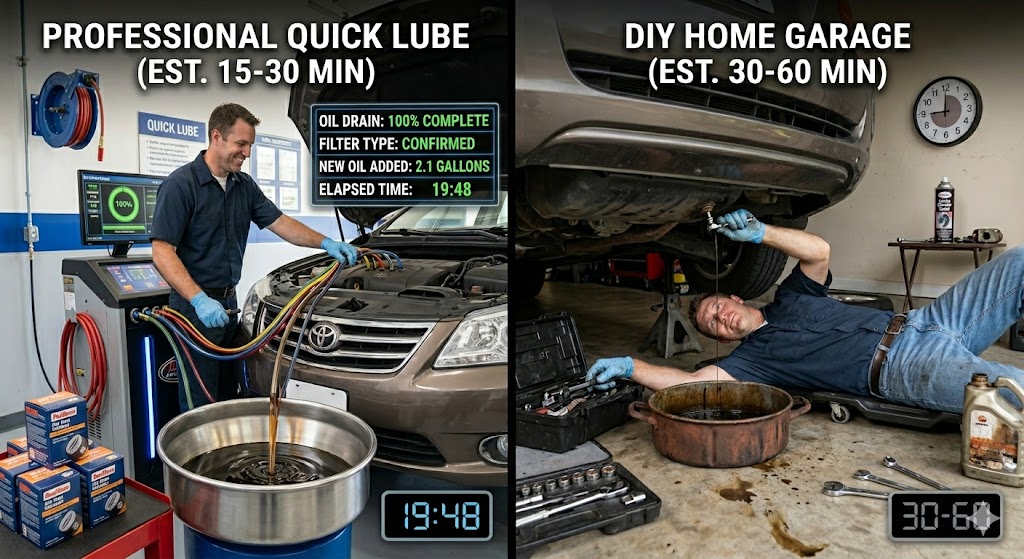
It doesn’t take as much time. Changing and replacing oil can be done within 45 minutes. It may take this long if you are to replace the oil filter. Most drivers don’t replace their filters. Ideally, you should do that every year or when changing the engine oil.
Apart from maintaining a proper oil change routine, the location where you perform the service counts. For example, a quick lube joint, a dealership, or at Walmart, will not take the same time.
The Average Time for an Oil Change
Under normal circumstances, a regular oil change will take around 30 minutes. That’s to drain the old oil, remove the filter, and then fill the engine with fresh oil.
You may see 15 minutes on some lube shops. Yes it does happen, but it depends on the cars in the queue, oil and type of car too. If you are using synthetic oils and filters, it will take more than the time advertised.
Why Oil Changes Don’t Always Take the Same Time
Changing an engine oil sounds very easy; however, each vehicle is a bit different. Some engines are easy to access, while in some, you may need to remove the covers or panels just to get to the oil pan or filter.
In addition, some auto shops go extra miles to run a proper scan outside the oil change service.
They’ll look at the fluids, the belt, hoses, and the tires. All are useful, but they do add a couple of minutes and maybe extra cost.
So whenever people ask me, “How long does oil change take?” I tell them it depends on your car, location and technician and other unforeseen issues.
Oil Change Time at a Dealership
An oil change at the dealership usually takes about 45 minutes to 1 hour. That’s longer than a quick service shop, but there’s reason for it.
Dealership technicians are trained to use manufacturer-specific procedures. They use OEM parts, manufacturer-recommended oil, and digital inspection systems.
Now, that additional attention takes time, but it might worth it if you drive some of the latest cars or one still covered by a warranty.
You’re also more likely to get a complete health check on your car, rather than just pouring a fresh oil.
How Long Does an Oil Change Take at a Quick-Lube Shop?
Quick lube shops are designed for speed. A lot of drivers choose them because they don’t need an appointment to get in and out.
When the queue is short, you can get your oil changed in 15 to 25 minutes. These shops often have more than one technician working on a car, which helps things move fast.
However, even quick lube centers can get backed up during lunch hour and on weekends.
Oil Change Timing at Walmart Auto Care Centers
Walmart provides oil change service in different locations, and it is cheaper than what you’ll pay at a dealership. An oil change at this place is about 30 minutes to 1 hour on average.
How long it takes also depends on how busy the auto care center is. If you want a faster service, then book on time.
What Actually Happens During an Oil Change?
Knowing what a mechanic does during an oil change explains why it takes so long.
First, your car is hoisted on a lift or driven onto ramps. Then you drain the old oil from the oil pan. It needs time to flow completely out, which can take a few minutes.
Next, the old filter is removed and a new one put in. Fresh oil is added to the engine and the technician checks if oil is dripping.
Why you should also change oil filters
Some people think that an oil change is just about refilling the oil, but the oil. A filter is just as important.
It effectively catches dirt, metal particles, and oil sludge that accumulate as the engine is running. If you don’t change the filter, the new oil becomes dirty.
The oil filter captures metal particles and sludge from the oil before it circulates through the engine. That’s why experienced mechanics agree: “Oil and filter should always be changed together.
Filter changes only take a few minutes, but this extra step protects your engine for thousands of miles.
Waiting Time vs. Actual Service Time
Some people complain that oil changes take too long, but the delay is often not due to the work itself, but to the waiting time before the car even gets to the garage.
The actual repair usually takes less than 30 minutes, but with five cars in front of you, the waiting time at the garage can easily exceed an hour. That’s why you book early.
Does Synthetic Oil Take Longer to Change?
Synthetic oil flows and drains just like conventional oil, so the time required for an oil change is about the same, but it depends on the repair shop, it can take a little longer.
Synthetic oil is a lubricant artificially made and is chemically processed to provide superior performance.
In contrast to traditional oil, which is directly processed from crude oil, synthetic oil is processed to be more stable, cleaner and last longer.
It doesn’t break down as quickly at high temperatures, it flows better during cold weather starts, and it lasts longer when it’s working hard.
That’s why synthetic oil is recommended for today’s engines, turbocharged systems and vehicles that operate in extreme conditions.
Many synthetic oils come with upgraded additive packages that can help with engine wear, keep deposits clean, and prevent sludging.
Synthetic oil filters are manufactured to withstand longer drain intervals without failing, while cheap filters may fail before the synthetic oil does.
Changing synthetic seems to take longer time because synthetic oil involves additional testing and the use of higher-quality oil filters.
These measures can extend the duration by a few minutes, but the difference is not big. So even if you switch to synthetic oil, you don’t have to plan any extra time for it.
How Your Car’s Design Affects Oil Change Time
Some vehicles are built with maintenance in mind. Others not so much.
If your oil filter is located behind the engine or under panels, the mechanic will need additional time to get to it. Luxury and high-performance vehicles are frequently included.
The Fastest Way to Get an Oil Change
If you’re trying to reduce the waiting time, choose early mornings, mid-week afternoons, and non-holiday periods, they are usually the least busy.
Avoid weekends unless you enjoy sitting in waiting rooms.
Some drivers also check online wait times or call ahead, especially before heading to busy locations like Walmart.
Is a 15-Minute Oil Change Realistic?
Yes, but only under ideal conditions. Quick lube shops often advertise 15-minute service, and they can achieve it when everything goes smoothly.
That means:
- No queue
- Easy access to the oil filter
- No additional services requested.
What Happens If the Shop Finds Other Issues?
Your oil change sometimes turns into a longer visit when the technician sees something else. They may find a leaking gasket, worn brake pads, or low coolant.
They’ll ask if you’d like to have it fixed immediately. If you say yes, your 30-minute oil change could end up as a two-hour service appointment.
That is why some oil changes take longer than expected.
Can You Stay in Your Car During an Oil Change?
Well it is possible at some lubes. They have drive-through bays where customers stay in their vehicles while technicians work under the hood.
This arrangement can make the experience seem faster, even if the actual service time is the same. For your information, most dealerships or walmarts will have you wait in a lobby for safety precautions.
How Long Does an Oil Change Take If You Do It Yourself?
There is no doubt that you can change the engine oil yourself as long as you adhere to your province or local environmental rules for disposing used oil.
Here’s what you need: car jack or stands or ramps, socket set, oil filter wrench, drain pan, new oil, and new oil filter.
Safety Warning: Do not work under a car that is supported by a jack alone. Make sure the car is on a stable, level surface.
If you’re doing oil change yourself at home, it can take more 45 minutes especially if you have never done it before.
You’ll have to get the tools, jack up the car safely, drain the oil, replace the filter, refill the engine and then dispose of the old oil properly. Cleaning up takes time, too.
DIY can save money, but the time can never be the same.
Oil Change Time for Different Types of Vehicles
Smaller vehicles typically require less time because the engine is simpler and easier to get to.
SUVs, trucks and high-performance cars may take longer because they have larger oil capacities and more confined engine bays.
Hybrid and electric vehicles are different too. Hybrids still need oil changes; fully electric cars don’t have them.
So the type of vehicle determines the time it will take to change the engine oil of your car.
Why the speed of your oil change shouldn’t be your only concern
Because of our busy schedules, we always go for a quick service, that shouldn’t be the only consideration. Improperly fitted filters or wrong oil levels can affect your engine.
A higher-quality oil change that takes a bit longer is still better than a rushed oil change that can leak or damage the engine much later.
How Often You’ll Need to Schedule Oil Changes
Most new cars only need an oil change every 50,000 to 100,000 miles, though that depends on the type of oil and how you drive.
That means you’ll just have do that every 6 months, at most 1 year. Frequent oil changes will also make your car run better and prevent any damage on the engine.
What to do while waiting for an oil change
It’s up to you. You may step out or wait while they service your car. Although, some dealership like General Motors and Honda have waiting rooms with free Wi-Fi, TV, and even snacks to help pass the time.
Final Thoughts: How Long Does an Oil Change Take?
It can take between 30 and 45 minutes to have an oil change although there is no exact time. Sometimes, it depends on the type of car, location and the technician handling the job.
The main thing is to change the engine oil when necessary and the ideal time is 6 months. There are several engine oils on the market; however, you should use the required brand and quantity for your car type.
For more information, check your car owners manual.
Never you top engine oil. Drain the old oil completely, and also change the oil filter whenever you want to change your engine oil.

-
Maintenance & Repairs1 year ago
Car Undertray Repair Cost
-
Car Tips & Advice1 year ago
Tyre puncture Repair Cost
-
Car Tips & Advice12 months ago
Is Automobile Insurance Tax Deductible?
-

 Maintenance & Repairs12 months ago
Portable Air Conditioner for Car
-

 Maintenance & Repairs11 months ago
How much does it Cost to Paint a Car?
-

 Car Tips & Advice11 months ago
Exhaust Pipe Repair Kit
-

 Car Tips & Advice11 months ago
AC Compressor Replacement Cost
-

 Maintenance & Repairs11 months ago
How to repair a scratched car wheel