Car Reviews
What Is a Certified Pre-Owned Car? Benefits, Warranty, and More

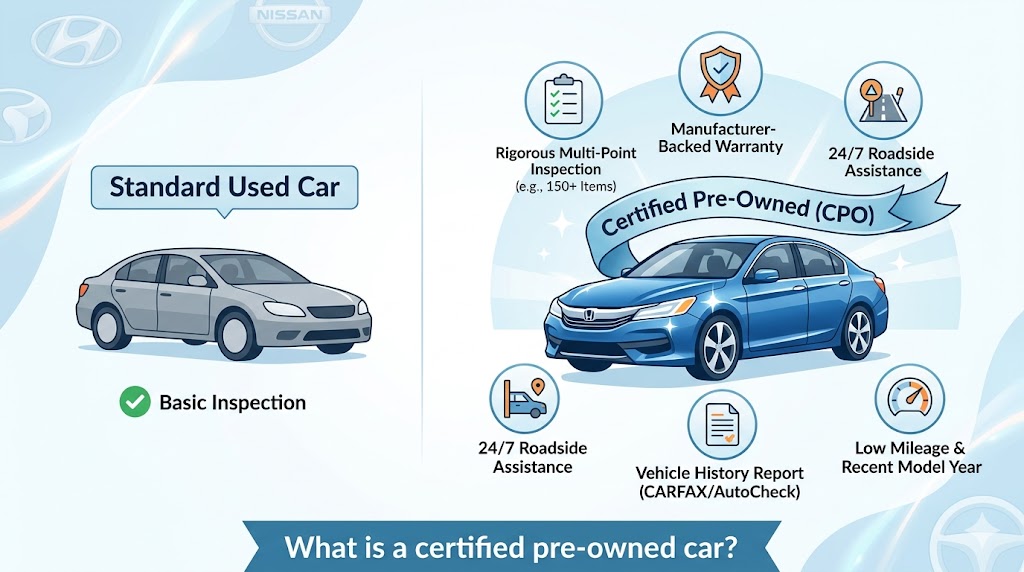
What is a certified pre-owned car? A certified pre-owned car is different from any used vehicle at the dealership. These cars pass through thorough inspections, and some necessary repairs are made. A warranty comes with them, too. CPO vehicles often come with benefits like roadside help, comprehensive inspection reports, and sometimes special financing deals. Brands like Mercedes and other top manufacturers stress that these are not your average used cars.
What Does Certified Pre-Owned Mean?
A CPO car is not just any used vehicle. It gets a full inspection from either the manufacturer or an authorized dealer. Usually, it includes extra protections like a warranty package you can count on. So, when people talk about “Certified Pre-Owned,” they mean a car that has been thoroughly checked and rechecked.
Certified Pre-Owned vs. Used: What’s the Difference?
A regular used car is a vehicle that someone else owned before you. You’ll check the tires, gear, and ensure that the engine is good. The manufacturer or owner doesn’t offer any warranty unless you decide to buy extra coverage. Now, let’s see what is in certified pre-owned cars.
A certified pre-owned car:
Has Passed a Detailed Inspection
It’s not only the engine that you will focus on.. There’s a long list of things to check like safety parts, electronics, and more. Instead of just answering with a yes or no, every part gets thoroughly looked at.
Includes a Manufacturer-Backed Warranty
At a car dealer shop, the seller may try to convince you to buy a particular car, but this is somehow different with a certified pre-owned vehicle. Here, you get an official warranty from the car manufacturer itself.
This warranty handles major repairs, so you’re covered. No need to rely on anyone’s word; you’ve got actual protection in place.
It is Newer and has Lower Mileage
To qualify for CPO, they consider the age and mileage. Typically, these vehicles should not be older than six years and should have driven fewer than 75,000 miles. However, the requirements depend on the manufacturer.
Why is a Warranty so Important?
Sudden car problems like transmission knocking, sensor malfunctions, or engine issues can lead to costly repairs. With a Certified Pre-Owned (CPO) warranty, much of this risk is reduced. However, it’s important to verify what the warranty covers and what it doesn’t.
Note that warranties are not the same. Some simply extend the manufacturer’s original coverage, while others provide additional benefits such as roadside assistance or even loaner vehicles during repairs.
How the CPO Inspection Works
Certified pre-owned inspections can be 100+ points, looking at:
- Engine condition
- Transmission health
- Electrical systems
- Safety features
- Suspension and brakes
- Vehicle history reports
- Wear and tear
A CPO inspection takes several steps. They include:
Step 1: Check Age and Mileage of the Car
Before a car gets to the inspection stage, it must meet certain requirements. Most Manufacturers set specific limits, such as:
Age: under 6 years old
Mileage: under 75,000 miles
But luxury brands, like Mercedes, have tougher rules. They don’t certify every car. Instead, they pay attention to newer models with lower mileage. Why do they do this? It’s because their parts and repairs are more expensive. These kinds of strategies help keep the brand’s image and quality intact.
Step 2: Multi-Point Mechanical Inspection
The real work starts now. Every brand has its own checklist for a CPO inspection, and these lists can range from 100 to 200 points. Technicians inspect various components. They look at the engine, transmission, brakes, suspension, steering, and exhaust systems.
They check if:
- Fluid leaks
- Worn belts or hoses
- Brake and tire condition
- Engine performance and unusual noises
Step 3: Electronics and Safety Features
Nowadays, cars come with features like airbags, audio systems, backup cameras, and sensors. CPO inspections make sure these electronic and safety parts work right. But imagine buying a certified car only to discover that the backup camera or adaptive cruise control is not working; nobody wants that.
Step 4: Proper Maintenance
The main emphasis is on mechanical aspects, but looks are important too. Inspectors take a look at:
- Body damage
- Scratches and dents.
- Interior wear and tear.
Before the certification process, a few interior problems are fixed. However, some might still be found during inspection. This helps you know what to expect in advance.
Step 5: Vehicle History Verification
A car might look flawless, but the CPO inspection still checks its history. The inspection examines past accidents, flood incidents, title problems, or any tampering with the odometer. Should any concerning details appear in the history report; certification is off the table for that vehicle.
Step 6: Certification and Warranty Activation
They have features like airbags, audio systems, backup cameras, and sensors. When a car is labeled Certified Pre-Owned (CPO), an inspection makes sure all these electronic and safety parts work correctly.
Mercedes and CPO
A certified pre-owned Mercedes has:
Passed a detailed inspection (Sometimes 160 checks)
Met age and mileage criteria (Not more than 6 years and less than 75,000 miles)
A warranty with an extra coverage outside the factory plan. That means when you’re eyeing that sleek coupe or SUV, it’s not just a pretty machine, it’s (supposedly) been inspected and backed by Mercedes-Benz.
What about Price? (CPO vs Used vs New)
When a car is new, you’re paying for the full price, basically the MSRP (manufacturer’s suggested retail price). For mainstream models, that can be from about $25,000 to $40,000 for a mid-range sedan or SUV and $50,000+ for luxury brands and trims.
Even small hatchbacks start above $20,000 in many places. But remember this: new cars lose value quickly, say around 20–30% in the first year!
Standard Used Cars
If you want something affordable, a used car might be your best bet. You can pick up reliable used models in the $10,000 to $30,000 range, depending on how old they are, vehicle condition, and mileage. In fact, older vehicles with more miles are less than $15K. Back in early 2025, the average cost of a used car was about $30,000.
Certified Pre-Owned (CPO)
A Certified Pre-Owned (CPO) car is priced higher than a regular used car but not as much as a brand-new one. The extra cost comes from thorough inspections, necessary repairs, and an added warranty that the manufacturers and dealers provide.
For instance, someone browsing cars online might find a CPO Kia Niro EV for about $23,000, while a similar model without certification costs around $21,000. So, the certification added about a $2,000 premium.
These aren’t exact MSRP numbers; they differ by the model and year but it gives you an idea of what to expect when buying a CPO car.
What You May Get From a Certified Pre-Owned Car
Buying a CPO car isn’t just about avoiding unnecessary repairs; it comes with some benefits that make life easier.
Manufacturer-Backed Warranty
Unlike most used cars, a CPO vehicle comes with a warranty from the manufacturer. That could cover your engine, transmission, and sometimes even electronics. Essentially, you’re not paying for a new car, but you still get some of the protections you would with one.
Roadside Assistance
Many CPO programs include roadside assistance, so someone comes to help. You don’t have to panic or beg for a jump-start. It’s small, but it matters. It’s part of the coverage but check if your manufacturer includes that in the warranty.
May Get a Loaner Vehicle
If your car needs repairs under warranty, some CPO programs give you a temporary loaner. It’s like a backup car.
Detailed Vehicle History Reports
CPO cars almost always come with a full history report. Accidents, service records, mileage verification are all included. You don’t need to know whether the last owner maintains the car or not.
Extra Offer
Some programs add a few extras, like free maintenance for a certain time, special financing rates, or exclusive deals on audio systems and tech accessories. However, not every certified pre-owned vehicle includes these offers. Find out from your manufacturer.
What to Watch Out For
Not all “CPO” cars are what they claim to be. Some dealers will paste a certified sticker on a car but they don’t provide that. A real CPO means the manufacturer checked it, fixed what needed fixing, and backs it with a real warranty. Anything outside that is a used car.
Dealer certification isn’t always real.
Some dealers just do a quick look-over and call it certified. That’s not the same as a factory-backed CPO. It’s like buying “organic” at a street market and later realizing it’s just regular fruit. Sure, it looks good, but the guarantee isn’t there.
Get the warranty on paper.
If they say, “Don’t worry, it’s covered,” ask for the documents. If it’s not included in the warranty, it simply means it is not in the coverage. It’s when your car needs a major repair that you will know you’ve been “played”.
Check what’s actually covered
Some CPO warranties sound enticing, but a lot of them skip wear-and-tear items like brakes, tires, or windshield wipers. Of course, the engine will be sound, but you could still spend on things you thought were included.
If it sounds too good to be true and there’s no paperwork. Walk away. A true CPO car should make you feel confident, not nervous.
Who Should Buy a Certified Pre-Owned Car?
If you’re after a car that nearly looks like a brand-new vehicle, consider a certified pre-owned (CPO) car or:
You want reliability without paying full price for a new car.
CPO cars are newer than used cars and have lower mileage. That means such cars would have a reduced amount of breakdowns, a few hidden problems, and less stress.
First-Time Car Buyers
Buying your first car comes with joy and confusion, especially when you don’t know much about cars. However, considering a Certified Pre-Owned (CPO) vehicle can make the process easier.
Unlike choosing any random used car and just hoping it works out, CPO cars undergo thorough inspections. So you may not need an auto expert to accompany you to a car dealer shop.
In addition, they have some form of warranty that provides support if issues arise. This option helps you not to buy a vehicle with hidden problems. If it’s your first car, consider a CPO.
People Who Plan to Keep Their Car for a While
For those who hold onto their cars for a long time, opting for a certified pre-owned vehicle can be a wise choice. It allows you to own a newer model that hasn’t been extensively driven, which reduces the likelihood of developing problems early..
The manufacturer or dealer has already inspected and approved the car; it gives the buyer that assurance that everything is in order. “Buy and drive’
Buyers Who Want Warranty Coverage
Not everyone is ready to take risks with car repairs. If paying out of pocket for major fixes worries you, think about getting a CPO car. Most certified pre-owned cars have extended warranties that cover certain repairs after purchase. So, if something breaks down during that time, there is coverage.
For most people, that added protection makes a CPO car more appealing than a regular used one.
You Need Extra Service
Certified pre-owned vehicles give you more than just a warranty. You also get roadside assistance, loaner cars when yours needs repairs, and detailed history reports on the vehicle. So, if those extras are important to you, choosing a certified pre-owned vehicle might be better than buying just any used car.
Final Thoughts: Is CPO Worth It?
Certified Pre-Owned (CPO) cars cost more than a normal used car. But is paying that extra money worth it? With CPO vehicles, you receive a checklist approved by the manufacturer, a warranty, and full disclosure about the car’s history. These elements are vital when problems arise.
If you’re skeptical about buying it, go for a brand-new car. However, you should know that some new cars shipped to your region can still have faults. So would you prefer to spend more now or face expensive repairs later?
Send the answer in the comment section. Also, like and share our posts on your social media channels.

-
Maintenance & Repairs1 year ago
Car Undertray Repair Cost
-
Car Tips & Advice1 year ago
Tyre puncture Repair Cost
-
Car Tips & Advice12 months ago
Is Automobile Insurance Tax Deductible?
-

 Maintenance & Repairs12 months ago
Portable Air Conditioner for Car
-

 Maintenance & Repairs11 months ago
How much does it Cost to Paint a Car?
-

 Car Tips & Advice11 months ago
Exhaust Pipe Repair Kit
-

 Car Tips & Advice11 months ago
AC Compressor Replacement Cost
-

 Maintenance & Repairs11 months ago
How to repair a scratched car wheel