
Maintenance & Repairs
Why Isn’t My AC Working in My Car? 5 Common Causes & Fixes

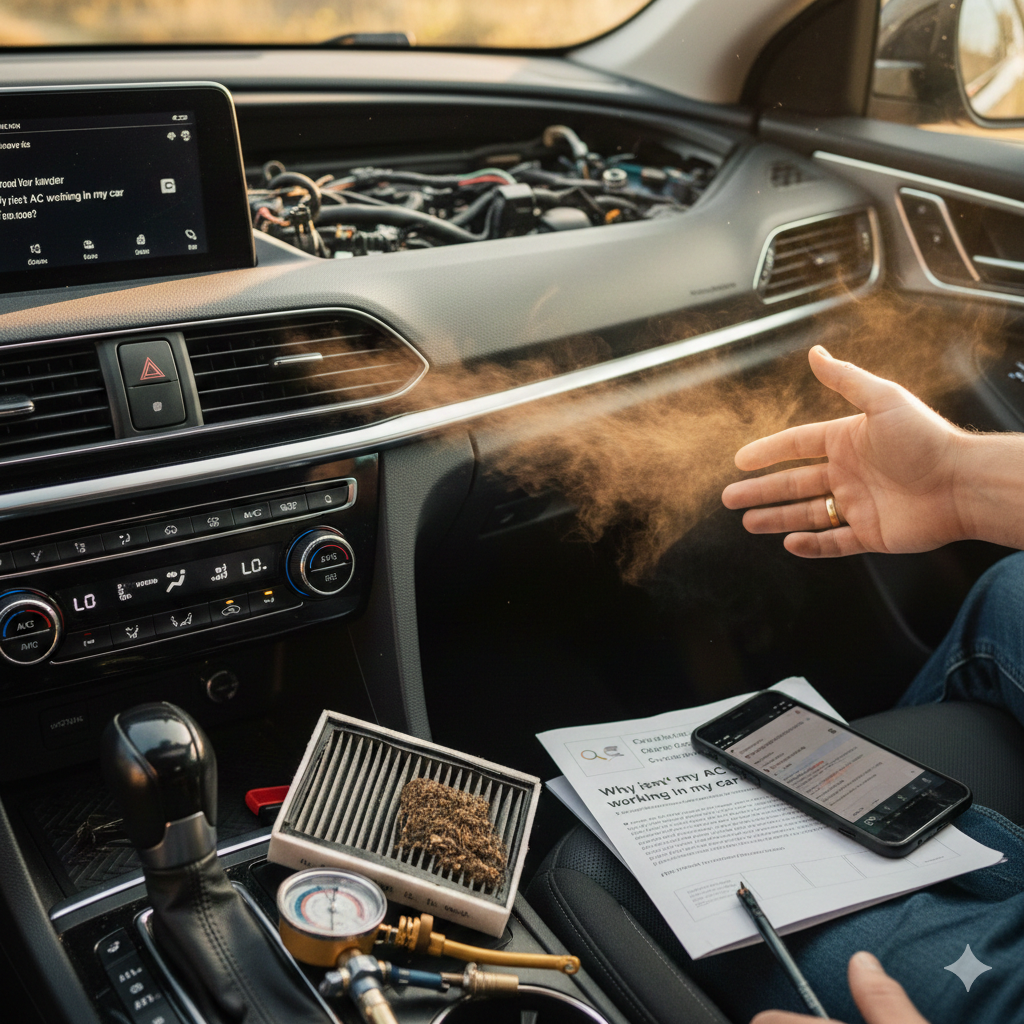
Why isn’t my AC working in my car
One of the most annoying and uncomfortable things a driver can experience on a hot day is the sudden blast of warm, humid air from your car’s vents. Although your first reaction might be to panic, knowing the intricacies of your car’s air conditioning (AC) system can help you identify the problem, calculate the cost of repairs, and determine when expert assistance is necessary.
This thorough guide will carefully dissect every typical cause of your car’s air conditioning system failure, from easy do-it-yourself solutions to intricate mechanical issues. In order to equip you with knowledge, we will go over the essential parts of the air conditioning system, the diagnostic procedure a professional performs, the approximate cost of repairs, and important FAQs.
The Basics: How the AC System in Your Car Operates
Before we can troubleshoot why your AC isn’t working, it’s vital to understand its basic operation. Car AC systems don’t “create” cold air; they remove heat and humidity from the cabin. This is achieved through a continuous cycle involving several key components:
- The Compressor: It raises the temperature of the refrigerant—a unique substance made to absorb and release heat—by pressurising it before sending it to the condenser.
- Condenser: Usually found next to the radiator at the front of the vehicle. As hot, high-pressure refrigerant gas passes through it, it cools and condenses into a liquid, releasing heat into the surrounding air.
- Receiver-Drier (or Accumulator): This part prevents other parts from corroding by storing liquid refrigerant and eliminating any moisture that might get into the system.
- An Expansion Valve: Known as an orifice tube, functions as a nozzle, limiting the flow of liquid refrigerant and drastically lowering its pressure. As the refrigerant enters the evaporator, this pressure drop causes it to cool quickly.
- Evaporator. It absorbs heat from the air blowing over its fins as the now-cold, low-pressure liquid refrigerant flows through it. In addition to cooling the air, this process eliminates humidity, which explains why water drips from under your car after the air conditioner is turned on.
- The system’s vital component is refrigerant. R-12 in the past, followed by R-134a, and in more recent cars, R-1234yf.
This constant cycle efficiently converts the hot, humid air inside your car into cool, dry air.
Related Post:How Often to Change Spark Plugs: A Complete Guide for Every Driver
The Main Causes of Your Car’s AC Failure (And What They Mean)
One of these prevalent issues is responsible for the great majority of AC failures. The first step to finding a solution is identifying which one you may be dealing with.
1. Low Level of Refrigerant (Freon)
This is by far the most frequent cause of an AC system that isn’t working. Refrigerant functions in a sealed loop rather than being “consumed” like petrol. Consequently, a low refrigerant level indicates a leak in the system.
- The issue is that refrigerant can leak out due to small cracks in hoses, worn seals (O-rings), a damaged condenser from road debris, or a leaking evaporator. Even a perfectly healthy system may eventually lose a little bit, but a large decline suggests a more serious breach. The system cannot efficiently transfer heat if there is insufficient refrigerant.
- The compressor may not engage at all, turn on and off rapidly, or blow warm air.
- The Significance of It Merely “recharging” a leaky system without fixing the leak is a temporary, ineffective solution. The refrigerant will leak out again. and you’ll have to start over, frequently wasting money and harming the environment.
2. A faulty air conditioning compressor
Your air conditioner’s workhorse is the compressor. The system as a whole comes to a complete stop if it fails.
- The issue is that the compressor is a pump powered by an engine. Over time, its internal pistons, valves, and bearings may deteriorate. Its clutch, a magnetic coil that activates the compressor when the air conditioner is turned on, may also malfunction mechanically or electrically.
- Symptoms include warm air being blown by the air conditioner, a loud grinding or squealing sound when the air conditioner is running, or the compressor clutch just not spinning (check under the hood while someone turns on the air conditioner). The serpentine belt may occasionally be shredded by a seized compressor.
- Why It Matters: A broken compressor can be costly. If the system completely fails internally, metal fragments could spread throughout the system, requiring a full system flush and replacing other components (like the dryer, condenser, and expansion valve), which would greatly increase repair costs.
If your AC is blowing warm air, the most common cause is a small refrigerant leak. Instead of paying a $200 shop fee, you can often find the leak and recharge the system yourself in 15 minutes.
[Check Price on our Recommended AC Recharge & Leak Detection Kit →https://amzn.to/3LvoOkr
3. Electrical System Issues
Electrical signals, fuses, relays, and sensors play a major role in modern AC systems.
- The issue: The system may not engage due to a blown fuse, a malfunctioning relay (which serves as a switch for high-current components like the compressor), a broken wire, or a malfunctioning pressure sensor. For instance, if a low-pressure switch senses that there is not enough refrigerant, it may stop the compressor from starting, preventing it from running dry.
- Symptoms: The AC button illuminates, but nothing happens (no compressor engagement, no cold air). The air conditioner occasionally operates sporadically.
- Why it’s Important: Diagnosing electrical issues can be challenging and frequently calls for a multimeter and thorough wiring diagrams. While a simple blown fuse may be simple to fix, it may also be a sign of another short circuit that requires attention.
4. Condenser or Evaporator Problems
These two heat exchangers are essential to the AC cycle.
- The problem
- Evaporator: Situated deep within the dashboard, it is less likely to sustain physical damage, but corrosion can cause leaks (usually as a result of extended exposure to moisture, particularly if the drain hose is clogged). Musty smells can also result from water collecting inside the vehicle due to a clogged evaporator drain hose.
- Symptoms: Warm air conditioning is caused by condenser problems, sometimes with obvious damage or debris. Warm air conditioning and occasionally a sweet, chemical odour (refrigerant) within the cabin are caused by evaporator leaks. Water may seep onto the passenger floor due to a clogged evaporator drain.
- Why It’s Important: Replacing a condenser is not too difficult. However, replacing an evaporator is one of the most costly AC repairs because it frequently necessitates removing the entire dashboard.
5. Problems with the Blower Motor and Cabin Air Filter
Sometimes the delivery of the air itself is the issue rather than the cooling.
- Clogged Cabin Air Filter: This filter purifies the air that enters your cabin. Even if the system is cooling effectively, it may feel weak if it is severely clogged with leaves, dust, and other debris.
- Failure of the Blower Motor: This motor forces air through your vents. Air won’t flow or will only blow at specific speeds if it malfunctions or its resistor deteriorates.
- Symptoms: Even with high fan settings, the vents’ airflow is weak. The air conditioner may be chilly at the vents, but the volume is simply insufficient. A blower motor that is failing may only function on specific settings or make squealing noises.
- Why It’s Important: These are frequently the simplest and least expensive solutions. Many drivers neglect the cabin air filter, which results in years of subpar air quality and AC performance.
If your AC is blowing warm air, the most common cause is a small refrigerant leak. Instead of paying a $200 shop fee, you can often find the leak and recharge the system yourself in 15 minutes.
[Check Price on our Recommended AC Recharge & Leak Detection Kit →https://amzn.to/3LvoOkr
DIY Troubleshooting: What You Can Check Yourself
You can do a few simple checks before you rush to the mechanic.
- Examine the Fuses: Find out where the AC compressor fuse and relay are located by consulting your owner’s manual. Replace any blown fuses. You have an electrical short that requires a professional diagnosis if it blows again.
- Visual Analysis:
- Examine the compressor clutch, the outermost part of the pulley. When the air conditioner is turned on, it should rotate alongside the pulley. If the compressor is static, it is not functioning.
- Look for any obvious damage or excessive debris in the condenser (through the car’s front grille).
- Look for any visible leaks close to AC lines (some refrigerants contain a UV dye that makes leaks glow when exposed to a blacklight).
- When the engine is running and the air conditioner is on high, listen for the compressor to click. If you hear no click or odd noises like grinding or squealing, there might be a problem with the compressor.
- Cabin Air Filter: Locate and inspect your cabin air filter, which is usually found behind the glove box or under the hood next to the windscreen. If it’s dirty, replace it.
Related Post:Car Undertray Repair Cost
When to Consult a Professional (and What to Anticipate)
A professional should be consulted whenever you suspect a refrigerant leak or a major component failure (compressor, evaporator). Only qualified technicians should handle refrigerant because it is a regulated substance.
The Professional Diagnostic Process:
- Visual Inspection: They will begin by going over everything you did and searching for any obvious damage or leaks.
- Pressure Readings: They will attach a manifold gauge set to your air conditioning system’s high and low pressure ports. These measurements are essential for figuring out compressor efficiency and refrigerant levels.
- Leak detection:
- UV Dye: They may add UV dye to the system if it isn’t already there. After a few days of driving, they use a UV light to find any glowing leaks.
- An electronic leak detector is a sniffer device used to find airborne refrigerant molecules.
- Nitrogen Pressure Test: The system will be evacuated, filled with environmentally safe inert nitrogen, and pressure drops will be monitored. Without releasing any refrigerant, this verifies a leak.
- Electrical Testing: Using a multimeter, they’ll check for proper voltage and continuity to the compressor clutch, pressure switches, and other electrical components.
- OBD-II Scan: Modern cars often store fault codes related to the AC system in the body control module (BCM) or powertrain control module (PCM).
Projected Repair Expenses
These are only approximations and may differ greatly depending on the make and model of the car, labour costs, and the availability of parts.
- $100 to $200 for an AC system diagnosis (usually added to the cost of repairs if you move forward).
- Vacuuming the system and adding fresh refrigerant are included in the $150–$300 AC recharge (without leak repair). Not advised without first repairing a leak.
- Refrigerant Leak Repair (small leak, like an O-ring): $200 to $600 (diagnosis, part, and recharge included).
- Replacement AC compressor: $800 to $1,500 or more. This includes the compressor, a complete system flush and recharge, and frequently a new receiver-drier (which is always advised). Costs may increase dramatically if there is metal contamination.
- Replacement Condenser: $500 to $1,000+ (parts, labour, and recharge included).
- Replacement Evaporator: $1,000 to $2,500 or more. Because of the dashboard removal, this is one of the most labour-intensive AC repairs.
- Replacement blower motor and resistor: $200 to $500.
- Replacement Cabin Air Filter: $30 to $80 (DIY filters typically cost $15 to $30).
- The cost of replacing an AC pressure switch ranges from $150 to $350.
If your AC is blowing warm air, the most common cause is a small refrigerant leak. Instead of paying a $200 shop fee, you can often find the leak and recharge the system yourself in 15 minutes.
[Check Price on our Recommended AC Recharge & Leak Detection Kit →https://amzn.to/3LvoOkr
FAQs: Answers to Your Most Important AC Questions
When I’m driving quickly, my air conditioner blows cold, but when I’m idling, it blows warm. What’s the issue? A: This frequently indicates that your cooling fans are having issues. Enough air passes over the condenser at faster speeds to cool the refrigerant. The fans are meant to draw air through when they are idle. The condenser overheats and your air conditioner performs worse if they are not functioning. A malfunctioning fan motor, fuse, or relay could be the cause.
Are those “AC recharge kits” from the auto parts store acceptable to use? A: Use caution. They may offer a short-term solution for a very small leak, but they don’t address the underlying issue. More harm (such as to the compressor) can result from overcharging the system than from undercharging. More significantly, they frequently include “sealers” that clog AC parts and make future professional repairs more difficult. Usually, it’s a band-aid solution.
Why does the air conditioner in my car smell musty or mouldy? A: This is typically caused by bacteria and mould developing on the damp evaporator coil inside your dashboard. As the evaporator eliminates humidity, it becomes wet and cold. It turns into a breeding ground if it doesn’t dry out completely.
- Try mold-killing AC system refresh sprays, which are available at auto parts stores. Using the air conditioner and running it frequently. Another way to help dry out the evaporator is to leave the windows closed for a few minutes before turning off the vehicle.
My air conditioner’s compressor switches on and off quickly. Is that normal? A: No, rapid cycling (also called “short cycling”) is often a sign of low refrigerant. The low-pressure switch protects the compressor by turning it off when it detects that the pressure is too low. The compressor restarts and the cycle is repeated once the pressure has somewhat equalised. It could also indicate an overcharged system or a broken pressure switch.
Can my AC be impacted by a defective serpentine belt? A: Definitely. The serpentine belt powers the compressor. Poor AC performance or complete failure will result from the belt’s inability to turn the compressor pulley efficiently if it is worn, cracked, or slipping. Nothing that depends on the belt will function if it breaks, including the water pump, power steering, alternator, and air conditioner.
How frequently should the air conditioning system in my car be serviced? A check of the AC system should be performed every one to two years, according to most manufacturers. This isn’t so much a “recharge” as it’s a visual check for leaks or component wear, as well as a check for appropriate pressure and temperature output. You can avoid expensive major repairs by finding small leaks early.
Why does my air conditioner blow warm on the passenger side and cold on the driver’s side? A: This is a typical sign of a low refrigerant level resulting in inadequate cooling on the longer lines or a blend door actuator failure, particularly in vehicles with dual-zone climate control. For particular zones, the blend door actuator regulates the amount of hot and cold air that mixes into the vents.
In conclusion, get it checked instead of worrying about it.
More than just a hassle, a broken car air conditioner can pose a serious threat to comfort and safety in extremely hot conditions. While some minor problems like a dirty cabin air filter or a blown fuse can be easily remedied, deeper issues often require the specialized tools and expertise of a certified automotive technician.
You can approach the repair process with confidence, ask knowledgeable questions, and make sure your car is prepared to keep you cool for many miles to come if you know the “why” behind your AC’s failure. Make it a priority to have your air conditioning system inspected as soon as possible to avoid small problems turning into larger, more expensive repairs.

When a car stalls while driving, something’s wrong with the fuel pump, electrical, or engine systems. Most of us check the radiator and battery head daily before driving out; however, some other things can make the car jerk as we are driving or stop us on the road.
The truth is that many drivers neglect warning signs in the car. Before a car breaks down or develops mechanical faults, it must have shown you signs, but you ignored them. Many modern cars now have features that can display warning issues on the dashboard, such as the check engine light, oil change, and maintenance light.
Older cars may lack these features. So, it will require regular servicing like oil change, cleaning, or changing spark plugs. They may appear little at first; however, these things can make your car stall when driving.
What It Means When a Car Stalls While Driving
When a vehicle stalls, it shows that there is little or no combustion in the engine. Sometimes, the stalling is irregular but can increase, especially in traffic or on a hill.
Many modern cars have complex systems under the hood, yet they rely on three essentials: fuel, air, and spark. Fuel supplies the engine with energy. Air is vital because it helps the fuel burn properly. The spark ignites everything. This combination is needed for the engine to function well.
In addition, you may notice that the steering wheel feels tough to turn, and pressing the brakes will require more force. If any feature fails, it can affect engine performance.
Even if the car restarts after some minutes, that doesn’t mean you should not check what must have caused that. Although it might be a minor issue, it is like a signal from your car suggesting you attend to them.
Common Causes of Car Stalling While Driving
A vehicle can stall for many reasons. Let’s look at the most common issues.
- Fuel System Problems
This is a frequent cause of a car stalling. An engine needs a continuous fuel supply to function well. Without enough fuel, everything slows down and eventually stops.
If the fuel pump is going bad, the filter gets clogged, or there’s a dip in pressure, that is when there won’t be adequate combustion. Because the fuel is not flowing well, the engine will shut off, or the car will jerk as you are driving.
The car might feel sluggish when trying to speed up, as if it’s moving through mud. When you go faster, there could be a slight jerking or sputtering because the engine can’t keep pace.
Sometimes, pressing the throttle doesn’t get an immediate response; there’s a pause before power kicks in like it usually does. Ignoring these signals only makes things worse with time.
- Battery and Charging Issues
When your car stalls during a drive, don’t ignore the battery and charging system. Starting the engine isn’t the only job of the battery; once on the road, the alternator powers everything. If it fails, your battery drains fast. At first, you may see dim headlights or weak acceleration, and warning lights may pop up on your dashboard.
If you don’t notice this on time, the car will stop. Loose or worn out battery terminals can disrupt power flow, too, causing unexpected stalling. Sometimes, if the alternator is not charging the battery, the car will shut off. But this happens when you turn off the car.
To get to the root of these issues quickly, use a multimeter or diagnostic tool to check if your battery’s low or if there’s an issue with the alternator.
- Faulty Sensors and Engine Management Systems
Today’s cars depend a lot on sensors and the engine control unit (ECU) for smooth operation. If any sensor is getting weak or fails eventually, it can confuse the system; thereby cause the car to stall while you’re driving.
Take, for instance, a malfunctioning mass airflow sensor (MAF); it can give an incorrect air reading, which may warrant either too much or too little fuel to reach the engine.
When a broken crankshaft or camshaft position sensor affects the timing, it can stop the car. Even small issue like a faulty throttle position sensor can cause problems.
Sometimes, the check engine light alerts you, but not always. When stalling occurs and you suspect sensors are at fault, use a diagnostic scan to identify the exact problem.
- Ignition System Failures
The ignition system is what starts your engine and keeps it going. Basically, it sparks at the right time to light up the air-fuel mix in the engine’s cylinders. That tiny spark gives your car the power it needs to move.
When those spark plugs are weak, they prevent the car from starting. And if by chance it starts, the car can stop on the road. Parts such as worn-out spark plugs, a malfunctioning ignition coil, a faulty crankshaft position sensor, or damaged wiring can disrupt this spark.
Spark plugs can fail because of:
- Normal wear and tear
- Carbon buildup (carbon fouling)
- Oil contamination (oil fouling)
- Overheating
- Incorrect spark plug gap
- Using the wrong type of spark plug
- Faulty ignition coil
- Poor fuel quality
- Air-fuel mixture imbalance
- Engine overheating
- Loose or damaged wiring
- Detonation or pre-ignition
- Coolant leaks into the combustion chamber
- Airflow Problems and Vacuum Leaks
Engines need a balanced mix of air and fuel. When there’s too much air or not enough fuel, you get a lean mixture. This makes the engine struggle to keep up its power. You may also notice a small hesitation or an uneven idle before things get worse.
After a while, little issues like a dirty throttle body or a tiny vacuum leak can affect this balance. When that happens, your car can stall when you slow down or stop at traffic lights. At first, it’s subtle, but ignoring it can cause further problems in the engine area.
Warning Signs Before a Car Shuts Of
When you hear an unusual sound or see signs on your dashboard when driving, park and check. Cars don’t just stop; it shows warning signs like:
- Engine sputtering
- Loss of power when accelerating
- A dashboard warning light appears briefly.
- Rough idle or shaking
- Difficulty maintaining speed
What Happens the Moment Your Engine Shuts Off While Driving
- Once the engine stops, the car acts in another way. You start to see it:
- Power steering assistance disappears or weakens.
- The brake pedal feels harder.
- Acceleration becomes impossible.
Can a Car Start Again After Stalling While Driving?
It can happen, and sometimes you barely notice anything wrong. If the problem was temporary, like a short fuel interruption or a minor sensor issue, the car may start again when you turn the key.
If it refuses to start, then it could be a more serious mechanical or electrical problem. Even if it starts again after some minutes, ignoring this can lead to bigger repairs later.
Also, some cars show patterns in how they behave. The car keeps stalling, but it only gets going once the engine cools down.
Issues like an overheating fuel pump or a faulty sensor could be the cause. In simple terms, whether the vehicle starts immediately or not, frequent stalls clearly indicate something’s wrong.
Reasons Your Car Won’t Start After It Shuts Off
If your car stalls and then refuses to restart, the issue is more severe.
Common reasons include:
- Dead or drained battery
- Failed fuel pump
- Faulty ignition switch
- Engine overheating
- Blown fuse or relay
Sometimes, if there’s not enough oil pressure or it gets too hot, the engine could seize. This means it just can’t turn anymore. While that’s not common, when it does occur, it’s costly to fix.
How Mechanics Diagnose Car Starting Problems
A good technician follows a process.
They typically:
- Scan for trouble codes.
- Check fuel pressure.
- Test the charging system.
- Inspect sensors and wiring.
- Look for vacuum leaks or air intake issues.
These days, cars have systems that can detect faults. So, if a car stalls now and then, it may leave electronic signs. But here’s the thing: not every issue makes a warning light flash.
Related Post:How to Check a Car Alternator
What To Do Immediately When Your Car Stalls on the Road
As a driver, you should have some basic mechanical skills. It’s not everything that requires the service of a mechanic. Sometimes, a weak battery cap or a bad fuel pump can prevent the car from moving normally.
Ordinarily, there are signs. However, if your car stalls on the way, there are a few things to do.
- Try to restart the car.
- Turn on hazard lights.
- Shift to neutral
- Park in a safe area.
If the first attempt didn’t work, restart again.
Don’t slam the brakes. If the engine won’t start again, don’t try to crank it over and over; it can drain the battery and cause more problems.
How to Prevent Car Stalling
You can’t stop every mechanical problem. But the good news is that routine maintenance can lower the chances of your car unexpectedly breaking down. Here are some things you can do:
Change fuel filters as recommended
A blocked fuel filter can affect the fuel supply to the engine. If the fuel filter is bad, you’ll notice these signs:
- Engine sputtering
- Difficulty starting the car
- Poor acceleration
- Engine stalling
- Rough idling
- Reduced fuel efficiency
- Loss of power under load
- Engine misfires
- Check engine light coming on
- Hard starting or long cranking time.
Look for Battery Terminal Corrosion
Corrosion on battery terminals can lead to major issues like the car stalling. With time, a white or bluish substance may gather around the terminals and disrupt the car’s electrical flow. If the connection is weak or unstable, it will affect the car performance.
Clean Engine Sensors
Modern cars depend a lot on sensors for the engine to work right. Key ones, like the mass airflow and oxygen sensors, manage how much air mixes with fuel. With time, dust and debris may block them or send incorrect signals to the engine.
This can result in bad performance, rough idling, or even stalls. So, cleaning these sensors regularly helps them to function correctly.
See how to clean engine sensors.
- Turn off the engine and disconnect the battery.
- Locate the sensor (e.g., MAF or oxygen sensor).
- Carefully disconnect the sensor wiring connector with a Torx or Phillips screwdriver
- Remove the sensor with a sensor socket or a deep-well socket
- Spray the sensor with a dedicated sensor cleaner.
- Do not touch or scrub delicate parts.
- Allow the sensor to air dry completely.
- Reinstall the sensor properly.
- Reconnect the wiring connector.
- Reconnect the battery and start the car.
Buy Quality Fuel.
Using poor-quality or contaminated fuel can affect the engine. It’s important to buy from reliable stations. If possible, get a fuel injector. Use popular brands like Liqui Moly, Sea Form, and Lucas Oil.
Why Modern Cars Stall Less Often Than Older Vehicles
Back then, cars ran mainly on mechanical systems. They used belts, carburetors, and basic switches for tasks like fuel delivery, timing, and ignition. If they don’t set right, the car would stop without any warning sign.
Modern vehicles are quite different. They use electronic fuel injection, computer-controlled engines (Electronic Control Module (ECM), and several sensors that work simultaneously, such as regulating fuel, air, and spark automatically.
However, when a modern car stalls, if you don’t use an OBD scanner, it may be difficult to know the exact cause. Unlike older cars, they show signs of engine misfires or fuel smells. So, you will need a professional diagnosis in these situations.
Final Thoughts
A car doesn’t stall without a reason. Something can trigger that. It could be a faulty fuel pump, electrical issues, air intake, or mechanical problems. The challenge sometimes is that you may not know the exact problem. In this case, a scanner can be used to detect the particular problem.
In some situations, when a car stalls while driving, a restart can work. This happens when there is a glitch.
If restarting the car works and everything appears fine, turn it off to see if it will start again. To prevent this from happening, call your mechanic to check the car.

Toyota Financial Services, Ford Credit, and Honda Financial Services, allow refinancing and gap insurance. While filling out a form, the dealership may ask if you want Guaranteed Auto Protection (GAP coverage). Don’t be quick to say yes or no if you have no idea what they are talking about. Find out how much gap insurance costs and whether you even need it.
Most buyers at this point hurriedly tick the box without knowing what they just signed up for. Once you agree to the terms and conditions of the coverage, you must keep to the agreement. And some terms you may come across is Guaranteed Auto Protection or Coverage.
What Is Guaranteed Auto Protection (Gap Coverage)
Before we get to the cost, let’s clarify one basic question: What is gap coverage, and why does it keep appearing whenever someone talks about car financing?
In essence, gap insurance covers you for the shortfall between what your standard car insurance pays out after a total loss and what you still need to pay on your loan or lease. It is applied only when the car is declared a total loss or stolen and not found.
Here’s where it gets interesting. Cars apparently don’t retain value the way people think. Once you drive a new car off the lot, its resale value begins to drop. Your loan, however, doesn’t reduce.
You’re still paying interest on the full amount you borrowed. So it’s quite easy to owe more on your car than it is actually worth just a month or two after you buy it. That’s not poor financial planning, but how depreciation works.
“Gap insurance covers the difference between your car’s value and the amount you still owe on your loan. When drivers hear stories of people paying for a car that has already been totaled, they start asking, “How much does gap insurance cost?”
When gap coverage is included in your car insurance policy, most drivers are hit with a fee of $20 to $40 per year at most, which converts to about $2 to $5 per month. It is one of the cheapest add-ons that you can attach to a car insurance policy.
Buying gap insurance from a dealer can cost more. They charge a one-time fee ($400-$800+) added to your loan, rather than a small monthly payment. So, you are paying a premium price for the exact same coverage.
Gap insurance usually costs between $2 and $14 per month, or $24 to $168 annually. Rates depend on your vehicle’s value, loan amount, and state.
How Much Is Gap Insurance per Month with Major Insurers
Gap coverage is calculated differently by insurers. One company might refer to it as “gap insurance,” while another uses the term “loan/lease payoff coverage.” They have the same purpose, but the amount and definition of coverage are different.
Take, for example, Geico, which provides gap coverage in some states and not as part of a comprehensive policy. Progressive has a similar product called loan/lease payoff coverage, but with important distinctions: it rarely covers the entire amount; often covering only the gap up to 25% of the car’s actual cash value. (research yours for the exact percentage).
These coverage thresholds can make a huge difference in your payout when you make a claim.
Your gap insurance premium is calculated with these considerations in mind:
- Vehicle Value: Higher-end vehicles have a greater potential “gap” between their value and loan balance, driving up costs slightly.
- Loan Terms and Amount: The more you financed the car’s cost or the longer your repayment term, the greater the chance you’ll owe more than the car’s worth and the higher your cost.
- Location: Residing in high accident or theft areas may raise your premium.
- Driving History: Although gap insurance is associated with your loan, the car insurers may consider your driving history when determining how much your overall policy will cost. A clean record keeps costs down; a claims history can increase them.
Gap Insurance Cost Through a Dealership vs. an Insurance Company
It’s one of the largest areas where drivers overpay and don’t even know it. You’re already concentrating on interest rates, monthly payments, and the paperwork, so when the dealership presents gap protection, it seems like just another box to check before you drive off in your new car.
Gap insurance is typically offered at dealerships as a one-time fee ($400–$800), which is then added to your auto loan, so you end up paying interest on it for the duration of the loan. This brings the accessory rate much higher than the sticker price.
Or you can buy gap insurance from your car insurance provider for a small additional premium. You get the same basic coverage, but you don’t pay the interest.
The difference in prices can pile up. “It’s cheaper to pay a couple of dollars a month than to pay a few hundred all at once.”
Why Gap Insurance Exists Primarily on New Cars
Most cars lose about 15 to 20% of their value within the first year, sometimes even more, depending on the make and model. That means that a vehicle you paid $30,000 for could realistically be only worth $24,000 or $25,000 by the time you’ve made just under a year of payments.
Nothing is wrong with the car. The car value is only depreciating, that’s all.
When you buy a car using financing, you are repaying the entire cost including the interest. At the initial stage, most of your payment is going toward interest instead of principal. So your vehicle is depreciating fast, but your loan balance is decreasing slowly.
New cars depreciate quickly and often cause a major gap between the value of the car and the loan balance for a long time. Used cars, on the other hand, have already taken that steep initial depreciation hit, so the loan-to-value gap is much smaller.
Do I Need Gap Insurance?
You likely need gap insurance if:
- You financed most of the car.
- Your loan term is longer than 60 months.
- You rolled old debt into a new car loan.
- You made a small down payment.
- You may not need it if:
- You paid cash.
- Your loan balance is already lower than the car’s value.
- You made a large down payment.
So the answer to “do I need gap insurance depends on several factors like the above.
How State Laws Affect Gap Insurance Cost
Gap insurance is not mandatory; some leasing companies and lenders may require you to add this coverage to your finance contract if you are not able to show proof of insurability.
Rates for insurance also vary by region. Those driving in areas that see a lot of claims often pay more, as total-loss claims are more frequent.
So your monthly cost in Texas or California, for instance, could vary even if you had the same car model.
What Gap Insurance Does Not Cover
Gap coverage is extremely particular. It simply covers the difference between the amount you owe on your loan and the actual value of your car in the event of a total loss.
It does not cover:
- Engine failure
- Repairs
- Missed loan payments
- Late fees
- New vehicle replacement
Gap Insurance vs. Loan or Lease Payoff Coverage: Are They the Same?
A few insurers, like Progressive, don’t call it “gap insurance.” They refer to it as loan or lease payoff coverage. It sounds different, but it essentially does the same thing: If your vehicle is destroyed or stolen, it pays the gap.
There is a limit, though. It’s usually about 25 per cent over what the car is worth. That’s fine for most people, but if you owe way more than your car is worth, it won’t cover even half your liability. It’s not exactly the same as gap insurance, but it is comparable.
For instance, if your loan was high and your down payment was low, you could still owe a balance even with this coverage.
When Gap Insurance Stops Being Useful
Gap insurance is not forever.
There’s no longer a gap to insure once your loan balance is less than the market value of your car. Gap insurance is only relevant while your vehicle loan balance is less than the market value of the car. It’s simple to get gap insurance when you buy a car, but many drivers fail to cancel it afterwards.
Months or years later, they don’t know they are still paying for the coverage they no longer need.
Call your insurer to end the monthly fee. It’s a little bit of savings, but with time, it all adds up. And it’s just nice to know that you aren’t paying for something you don’t need to. Gap insurance only provides value during the first few years of a loan or lease; beyond that, it’s extra, and it’s safe to cancel it.
Related Post:Dashboard Indicator Lights Meanings Explained
Factors That Change Gap Insurance Cost
Insurers look at risk and loan structure.
Key factors include:
- Loan-to-value ratio
- Vehicle depreciation rate
- Loan length in months
- Whether the car is leased or financed.
Luxury vehicles and fast-depreciating cars often come with slightly higher premiums.
Why Some People Think Gap Insurance Is a Scam
There are many drivers who will tell you gap insurance is a waste of money. For instance people that:
- Never had a total loss
- Paid off their loan early
- Or had enough equity to start with.
For example:
Car value: $20,000
Loan balance: $25,000
Accident total loss payout: $20,000
If you don’t have gap insurance coverage, you’ll owe $5,000 out of pocket.
The policy covers that gap, and then pays off the loan.
Should You Buy Gap Insurance From the Dealer or Your Insurance Company?
Dealers get commission on the add-ons. Gap coverage is priced by the insurance company as a policy add-on.
So dealership gap insurance is usually several times more expensive for comparable coverage. This is one of the simplest methods by which buyers overpay when financing a car.
When you’re shopping around, always check your insurer first.
How Gap Insurance Works With Used Cars
Most people think gap insurance is for a new car and not a used one, and this is not true. When you have a new car, depreciation hits the hardest right in the first couple of years, so gap coverage is typically most beneficial during that early ownership window.
With a used car, a large part of that value drop has already taken place by the time you buy it. This means that the amount of the loan and the market value of the car are closer in value, so the “gap” is smaller to begin with.
However, there are scenarios where it is worth it to get gap coverage on a used car. Even with used vehicles, you can still owe more than its worth if you financed close to the full price, took a long loan term, or rolled over negative equity from a previous car.
Gap coverage is the one type of insurance that can prevent you from owing money for a vehicle you no longer own.
The timing, however, is what’s different. Used cars reduce the gap quickly as you pay and the value of the car holds firm. So while gap insurance will still help you, you may only need it for a shorter period compared to someone who just drove a brand-new car off the lot.
How Long Should You Keep Gap Insurance?
Most financial advisors suggest that you keep gap insurance until:
- Your loan balance drops below market value.
- Or you refinance to shorter terms.
And that’s because most drivers hit this between the 18- and 36-month mark of their loan term. For the most part, it is safe to remove them after that.
Average Gap Insurance Cost Compared to Other Car Expenses
Typical costs are:
Expense Monthly Cost
- Fuel: $120–$250
- Insurance $80–$180
- Car payment: $300–$600
- Gap insurance: $2–$14.
Final Thoughts: Is Gap Insurance Worth the Cost?
Car insurance is a minor add-on, but it’s essential since it covers the difference between loan payments and the depreciation of the car. “Once your car is totaled, you are exposed to huge financial risk since the value of the car is depreciating faster than you’re paying off the loan.
GAP insurance is an asset if you have a big loan, lease your car, or own one that depreciates rapidly. But if you bought it outright, or you owe less than what the car is worth, you don’t need it; that will be an unnecessary expenditure.
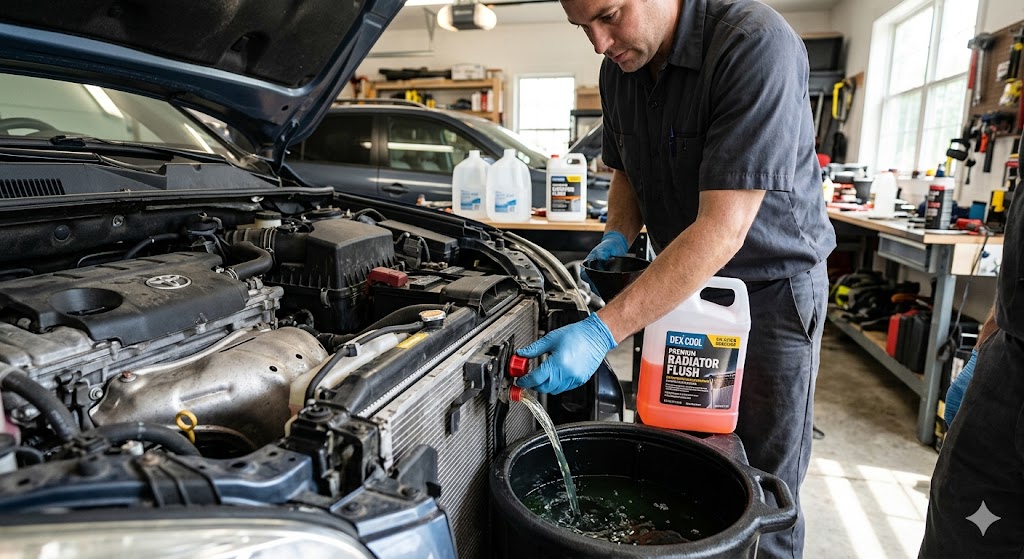
Flush the Radiator: Did you know that you can flush your car radiator by yourself? This may sound like a big deal, but if you have the correct tools, all these can be done in less than 45 minutes. But the question for those that want to follow this DIY method is what are the steps on how to flush a radiator.
Whether you drive a Ford, a Chevy, or something else, the procedure is almost the same. The only difference is the type of coolant, the location of the drain plug, and the volume of fluid your radiator can handle.
Related Post:How to Reset Check Engine Light: A Certified Mechanic’s Step-by-Step Guide
Your radiator is a vital component of the cooling system that stops your engine from overheating every time you drive. As the engine runs, it produces a tremendous amount of heat.
Coolant passes through the engine, where it picks up heat, then goes to the radiator to shed that heat into the air.
Without it, your engine would overheat in a matter of seconds. But the coolant inside that system doesn’t stay clean; it begins to gather rust, dirt, and tiny metal particles.
The rust inhibitors in the coolant also degrade with time. At that point, the coolants will no longer function as they should.
When the flow is restricted, heat cannot discharge effectively, and it will make the engine run hotter than normal. You may not notice it immediately, but the engine parts are under stress.
Flushing the radiator replaces that contaminated fluid and removes some of the debris from your system.
New coolant enables correct circulation of the coolant, heat transfer, and protect the internal components from corrosion and wear.
Skipping this maintenance can cause much more expensive problems than a simple flush, like a failing water pump, a clogged radiator, or even a blown head gasket.
These problems rarely occur; they take time to develop as you continue to run on dirty coolant. If you don’t flush it, those contaminants can clog up tiny paths inside the engine and radiator.
This leads to:
- Poor heat transfer
- Overheating
- Water pump damage
- Weak heater in cold weather.
A coolant flush clears that accumulation and removes old fluid with new coolant, bringing flow and temperature regulation back to normal.
How Often Should You Flush Engine Coolant?
When it’s time to flush your engine coolant, how often do you do this? This depends on factors such as the type of coolant your car uses, the way you drive, and your vehicle manufacturer’s recommendations.
- Coolant Type Makes a Big Difference
Not all coolants are equal. Traditional green coolant is actually the one older vehicles use and needs to be flushed regularly, usually every 2 years or 30,000 miles.
Many current model cars, including Ford and Chevy, now recommend the use of extended-life coolants such as OAT or HOAT coolants.
These last longer, and you can get 100,000 miles or maybe 5 years out of them before you perform a complete flush. But this does not equal “maintenance-free.”
Due to heat cycles, contamination, and normal wear in the system, the coolant may also deteriorate with age, even if it’s still okay.
- How you drive
You may need to flush the radiator earlier if you:
- Live in a hot climate
- Regularly on heavy traffic
- Always towing heavy loads or carrying extra weight.
These things cause your cooling system to run hotter and faster which accelerates coolant breakdown and the possibility of internal rusting.
- Check Your Manufacturer’s Maintenance Schedule
The most accurate information will come from your vehicle’s owner’s manual or the official service schedule. Manufacturers’ engines and cooling systems are tested under regulated environments.
Keeping the manufacturer’s interval will keep the following:
- Your engine is running efficiently
- Your warranty (if still active)
- And long-term workability.
Skipping it isn’t likely to cause immediate issues with your vehicle, but it can reduce the lifespan of several parts, such as the radiator, water pump, and heater core.
Practical Tips
In most cases, engine coolant should be flushed every 30,000 to 50,000 miles or every 2 to 5 years depending on driving conditions and the type of coolant used.
Signs It’s Time to Flush Your Radiator
Disclaimer: Always check your owner’s manual to know what is the exact recommended service interval, as it may vary from car to car.
Look Out For:
- Discolored – brown or rusty coloured, coolant in the radiator or coolant tank.
- Your Engine is running hotter than usual while idling or in traffic
- A sweet smell coming from the engine bay
- Have some small leaks.
Tools You’ll Need
Get all the necessary tools before you start so you don’t have to stop in the middle of the job. You’ll need:
- New coolant
- Distilled water
- Drain pan
- Funnel
- Gloves and safety glasses
- Wrench or pliers (for drain valve)
- Optional, but nice to have:
- Radiator flush cleaner
- Garden hose for deep flushing.
Step-by-Step: How to Flush a Car Radiator
Flushing a radiator is not difficult, but you must have some knowledge. If you follow the steps correctly, you can flush your cooling system.
Step 1: The Engine Must Be Cool
Make sure the engine is cool before you do anything. The cooling system is under pressure when the engine is running. Hot coolant expands, increase pressure within the radiator and hoses.
The pressure can cause boiling coolant to be forced out in a burst if you remove the radiator cap before the system has cooled down, which can lead to severe burns.
So, allow the car to sit for 2 to 3 hours after driving. You should always prioritize safety over speed.
Step 2: Find the Radiator Drain Plug
There is a drain valve or plug at the bottom of the radiator on most vehicles. In Ford trucks and Chevy sedans, it’s toward the passenger side, though it differs by model and year.
If in doubt, consult your owner’s manual, or check under the front bumper. Before you lose the plug, put a drain pan right under it.
Gently lose the plug and allow the coolant to drain completely. As the fluid drains, take a moment to look at it. If the fluid looks dark, rusty, it is a sign that your radiator needs some flushing.
Step 3: Flush the Radiator with Water
Draining the radiator removes most of the old coolant, but it doesn’t clean the entire system. Replace the drain plug. Then add distilled water to the radiator, not tap water.
Distilled water has no minerals that could deposit inside the system. Once filled, start the engine and let it run for a few minutes.
Turn up the heater to its hottest knob next to it while the engine is running. So, what I do is allow the water to run through the heater core, which is a little radiator in the dashboard that cuts out a lot of basic guides.
If you skip this step, old coolant can get trapped in there and later mix with your new coolant.
After a few minutes, turn the engine off and allow it to cool again. Then release the drain plug to discharge the water. You may find the water way too discolored; that’s normal during the first rinse.
Repeat this until the water is clean. This ensures that the old coolant and debris are flushed from the system.
Step 4: Add a Radiator Flush Cleaner (Optional but Wise)
If the drained coolant looks particularly unpleasant, use a radiator flush cleaner. They remove rust, scale, and sludge that water alone can’t get rid of.
To use one, pour the appropriate amount of cleaner into the radiator, then add water to the system. Allow your engine run for 10 to 15 minutes, or follow the instructions on the cleaner’s label.
Then turn off the engine, let it cool, and drain the system again. You’ll see dark water out at this point, which means it’s doing a good job.
Step 5: Refill with Your Coolant Solution
Once the system is flushed and drained, you need to fill it with new coolant. Most vehicles run on about a 50/50 mix of coolant and distilled water.
Some coolant brands are pre-mixed and ready to pour into the radiator, and others are in concentrate form and need to be diluted.
Always check your owner’s manual for the following:
- The correct type of coolant
- The proper mixing ratio
- TSC-Specific Vehicle System Capacity.
Modern engines require a special coolant formulation, and the use of incompatible coolants, such as “traditional” green coolant with orange or yellow coolant that can form sludge within the system.
Slowly pour the coolant into the radiator through a funnel to prevent spilling. Fill to the specified level and top off the coolant reservoir.
Step 6: Bleed Air from the Cooling System
After filling, air pockets could remain in the cooling system. These pockets of air can prevent the coolant from circulating properly, leading to overheating, despite a full radiator.
Run the engine with the radiator cap off to get rid of this trapped air. Let the engine idle and observe the coolant level in the radiator.
When the thermostat opens as the engine warms up, coolant starts flowing, and you will notice bubbles on the surface.
This bubbling is normal: air is vented out of the system.
While it is going down, add more coolant to keep it full.
When the bubbling slows and the level levels out, you can put the radiator cap back on with confidence.
There is also a separate bleed screw on the thermostat housing or coolant lines in some vehicles as well. If your car has one, briefly opening it while the engine heats up can accelerate the escape of trapped air.
Check After the Flush
After flushing and refilling, go for a short drive, then keep an eye on the temperature gauge. The engine should warm up to operating temperature and remain constant without cycling.
Check the coolant level in the radiator and reservoir. It’s common for the level to drop a little bit after the first drive, as air remaining in the system escapes.
Filling it up at this point makes sure that your cooling system is completely full and is working as it should.
How Much Coolant Does Your Car Actually Use?
Typical capacities:
- Small cars: 5-7 liters
- Trucks and SUVs: 10-15 liters
- A Ford F-150, for example, uses more coolant than a Chevy Malibu.
Always check the exact capacity to avoid underfilling.
Mistakes People Make When Flushing a Radiator
Opening the radiator when it’s hot: This is bad because it can cause severe injuries.
Using tap water in place of distilled water: Tap water has minerals that will cause scale deposits inside the system.
Mixing incompatible coolant types
Green, orange, and pink coolants are not cross-compatible. Mixing them creates a gel-like sludge that can block passages.
How Much Does a Radiator Flush Cost?
Professional coolant flush is between:
$80 and $200, depending on vehicle type and service fee.
Dealerships for Ford or Chevy vehicles may be higher because they use manufacturer-approved fluids.
Flushing the coolant yourself can save money, but you have to dispose the old coolant carefully, because it’s toxic.
Signs Your Cooling System Needs Immediate Flushing
Your car usually provides warnings before severe overheating starts.
Watch for:
- Temperature gauge climbing above normal
- Coolant that is brown or muddy
- Sweet smell coming from under the hood
- Heater blowing cold air in the winter.
Neglecting these signs can result in costly damage, such as blown head gaskets or cracked engine blocks.
Differences Between Flushing and Draining Coolant
Draining and flushing are not the same. Draining only drains the fluid out of the interior of the radiator. Flushing flushes the entire system, comprising the following:
- Engine block
- Heater core
- Hoses.
If your coolant is slightly dirty, a drain and refill may be enough. But if there’s visible contamination, a full flush is the better choice.
Special Considerations for Ford and Chevy Vehicles
Although the flushing procedure could be the same in every brand, the formulas for the coolants in Ford and Chevy models are different.
Ford uses:
- Yellow or orange extended-life coolant
Chevy often uses:
- Dex-Cool coolant, has a longer life but sensitive to contamination by air
When these fluids are mixed with a standard coolant, they react to form sludge.
So every time you flush the engine coolant on these vehicles, always put in the right coolant.
Can You Drive Without Flushing Coolant?
You can, but not advisable. The used coolant turns acidic and corrodes metal parts. That corrosion also moves through the radiator, water pump, and engine passages.
Environmental and Safety Tips
Never:
- Pour coolant down the drains.
- Dump it on the ground.
Most auto shops and parts stores accept used coolant for safe disposal.
Final Thoughts: Is Flushing Your Radiator Worth It?
Regardless of whether you drive a compact Chevy Malibu or a heavy-duty Ford F-series pickup, as soon as you turn the ignition, the components are powered and the pump starts circulating right away.
Flushing the radiator keeps:
- Temperatures stable and it
- Reduces internal corrosion.
-
Maintenance & Repairs1 year ago
Car Undertray Repair Cost
-
Car Tips & Advice1 year ago
Tyre puncture Repair Cost
-
Car Tips & Advice12 months ago
Is Automobile Insurance Tax Deductible?
-

 Maintenance & Repairs12 months ago
Portable Air Conditioner for Car
-

 Maintenance & Repairs11 months ago
How much does it Cost to Paint a Car?
-

 Car Tips & Advice11 months ago
Exhaust Pipe Repair Kit
-

 Car Tips & Advice11 months ago
AC Compressor Replacement Cost
-

 Maintenance & Repairs11 months ago
How to repair a scratched car wheel